Nearly every park in Korea has a little cluster of exercise equipment sitting off to the side, usually near the walking path or right at the base of a mountain trail. Just bolted down metal contraptions that anyone can walk up and use. Somehow on every one of our walks, we manage to find someone using these in a new way.
These are called 야외 운동기구, literally "outdoor exercise equipment." Koreans also just call the whole setup a 야외 헬스장, an outdoor gym. Yeah, 헬스장 is 헬스 (health) plus 장 (place), so it's literally "a place for health." And since Koreans love an abbreviation, the version up in the mountains gets shortened to 산스장 (산, mountain, plus 헬스장), and the ones in the park become 공스장 (공원, park, plus 헬스장).
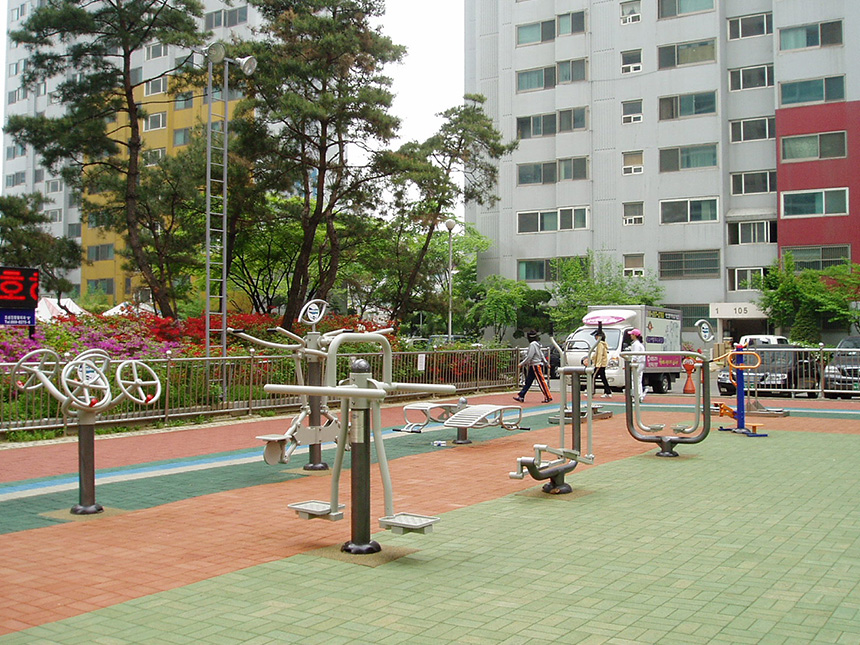
They tend to look something like this:
Some of the equipment names are surprisingly poetic. The one you'll see most often is 하늘걷기, "sky walking." In some places it goes by 공중걷기 instead. 공중 means "in the air," and 걷기 is "walking," and that's exactly what it is: you stand on two hanging footpads and walk in midair.

Call me Luke (Skywalker)
Another poetic one is 파도타기, "riding a wave." It's a standing platform that swings left and right like you're surfing, working your obliques and your balance at the same time.
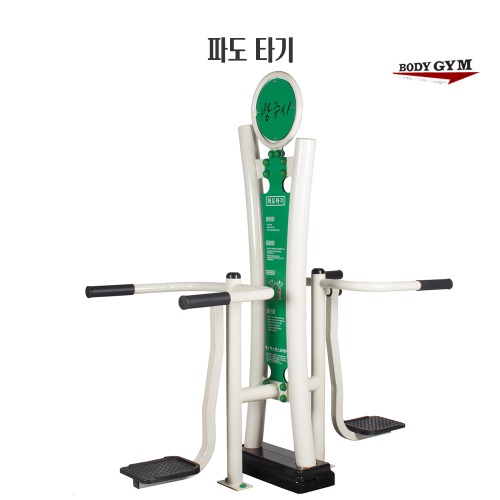
Cowabunga dude!
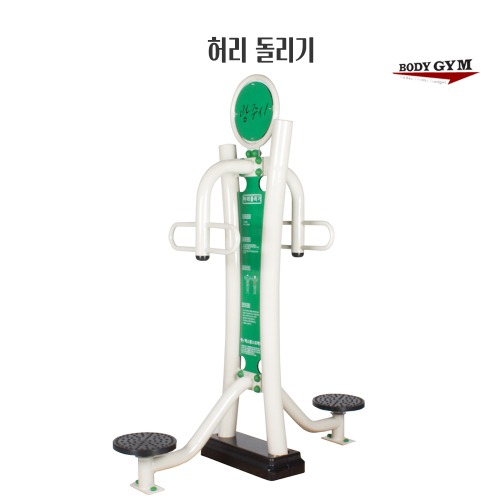
The rest of the names are a lot more literal. Anything that spins gets grouped under 돌리기 (to turn). There's 허리돌리기 for your waist, a platform you stand on and rotate your hips back and forth, and 팔돌리기 for your arms.

팔돌리기
There's also 달리기, which literally just means "running." Instead of a belt like a treadmill, you stand on two footplates that swing forward and back on their own, so your legs move through a running motion while your feet never leave the plates.

For your core, there's 윗몸일으키기, the sit-up bench. 윗몸 is "upper body" and 일으키다 is "to raise up," so together they mean sit-up.

Another one is: 거꾸로매달리기, the inversion bar. 거꾸로 means upside down, 매달리다 means to hang, so it's exactly what it sounds like, a machine that you place your feet into and then tilt yourself upside down to decompress your spine and stretch out. Also, just nice to lay horizontally!
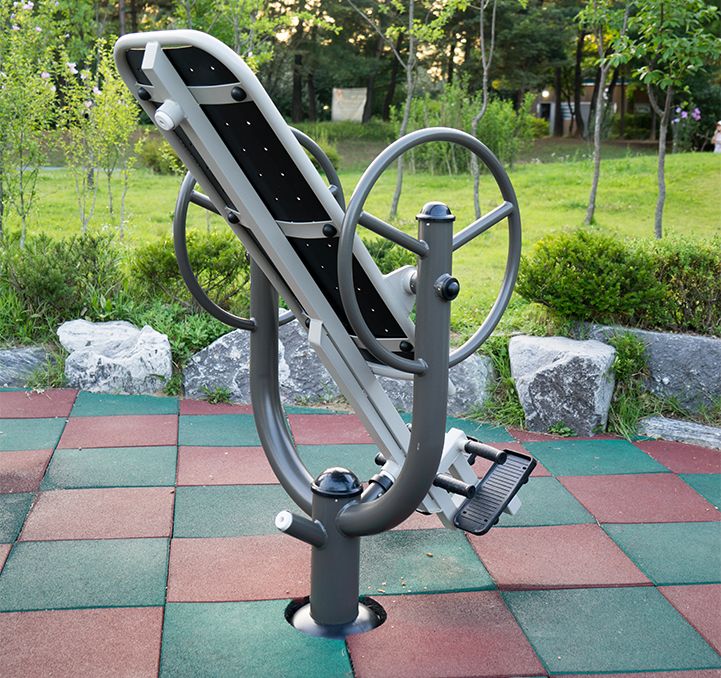
Another interesting sounding one is 등허리지압, a back and waist massager. 등 is back, 허리 is waist, and 지압 means acupressure. It's usually a row of rollers you lean against and rub your back up and down on.