Last week, we went to watch a live 굿 (shamanic ritual) performance at the 제주칠머리당영등굿 전수관 (Jeju Chilmeoridang Yeongdeunggut Transmission Center) here in Jeju. Walking in, we genuinely had no idea what to expect. And we walked out of the performance filled with energy!
The 영등굿 (wind spirit ritual) is the annual ritual asking the 영등신 (wind spirits) to bring good winds, calm seas, and abundant 해녀 (woman divers) catches as they pass through. It's been practiced for centuries, and in 2009, UNESCO added it to their list of Intangible Cultural Heritage of Humanity.
무당 and the rituals they perform are one of the most fascinating corners of Korean culture and once you understand them, you'll start noticing references to them everywhere.
Let’s dive into it!
![지난 2월 서울 중구 한국의 집에서 진행된 '이 땅의 굿, 굿도 보고 점도 치고'에서 굿하는 민혜경 만신. [사진 해동굿문화센터]](https://pds.joongang.co.kr/news/component/htmlphoto_mmdata/201907/27/375c46b3-5972-4b13-a99e-31762874732d.jpg)
What is a 무당?
A 무당 is a Korean shaman, someone who acts as a bridge between the living world and the spirit world. The older, more formal term is 무녀 (for a woman) or 박수 (for a man), but in everyday speech, 무당 covers everyone.
Most 무당 don't choose the job. They're chosen by it.
The calling is called 신병, literally "spirit sickness." It's a period of physical and mental suffering, like illness, visions, and hearing voices that's understood as spirits trying to force their way in. The only way to end 신병 is to accept the calling and undergo 내림굿, the initiation ritual that formally makes someone a 무당.
If you refuse? The 신병 just gets worse. There are Korean dramas that use this as a whole plot arc.
So what's a 굿?
굿 is the ritual itself. A ceremony where the 무당 calls on spirits, usually to ask for healing, good fortune, or safe passage for the dead.
Think of 굿 less like a quiet prayer and more like a theatrical performance. There's music (lots of drums and brass), costumes, dancing, food offerings, and the 무당 going in and out of a trance state where they channel specific spirits directly. It can go on for hours. Sometimes days.
무속 is the umbrella term for Korean shamanism as a whole including the belief system, the practices, the culture. This is mostly used in news and academic contexts.
신 (Sino-Korean) means spirit or god. 무당 work with many different 신 (there are thousands in the Korean shamanic tradition) ranging from mountain gods (산신) to household gods (가신) to the spirits of ancestors (조상신).
신내림 is the moment of divine descent, when the spirit first enters someone.
접신 means spirit possession: the moment the 무당 is actually channeling a 신.
부적 are talismans: the red-and-black printed paper charms you've probably seen. They're meant to ward off bad energy or bring good luck.
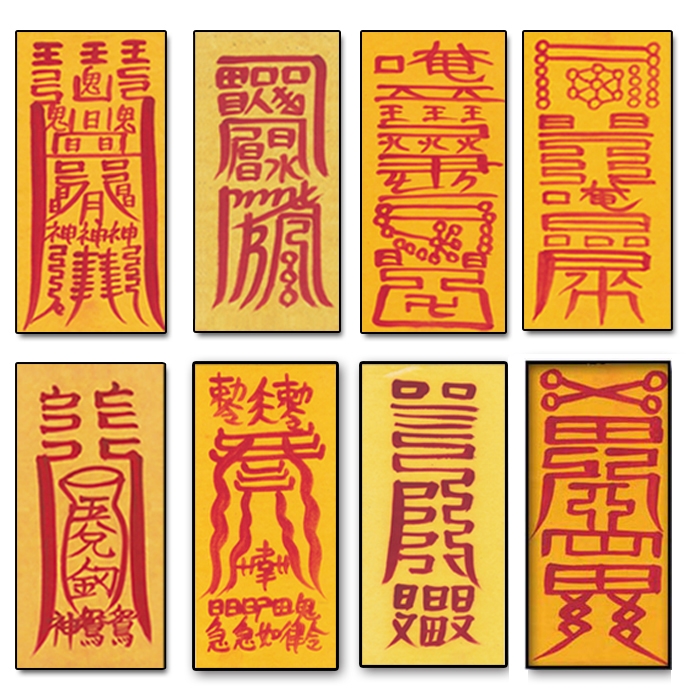
Is this still a thing?
It is 100% still a thing.
Despite Korea being a completely modern and tech-forward country, 무당 still have active practices, especially around major life events: before starting a business, before a big exam, when someone is sick, or when a family member dies and hasn't been properly seen off.
In 케데헌 (K-Pop Demon Hunters), they basically portray HUNTR/X as modern day 무당, who combat spirits (i.e., the demons) with classic tools used by 무당 (like the 신칼, spiritual knives).

The movie 파묘 (Exhuma), which was a massive hit in 2024, is basically built around 무당, 굿, and the Korean relationship with the dead and the land. If you haven't seen it, it's a good watch, and you'll understand it a lot better now.
겁나 험한 것이 넷플릭스에도 나왔습니다 | 파묘 | 넷플릭스
There's a phrase worth knowing: 무당집에 가다 ("to go to a 무당's house.") Koreans use this idiom when someone is desperate or has run out of options. Like "I've tried everything, I might as well go see a 무당."
Last note, if you walk past a 무당집, you might notice 卍 on the outside. It's called 만자, an ancient Buddhist and East Asian symbol meaning good fortune and divine protection. It marks the space as sacred and spiritually guarded. Nothing to do with the Nazi swastika, despite the resemblance. First-timers often do a double take. Now you won't have to!