Today we’re gonna take a look at a construction that has proved incredibly useful. You might know how to say something is delicious, or beautiful, but adding this ending will give the nuance of you reporting to the person knowledge that you learned or experienced. It adds another layer of depth to your speech.
We’ll be looking at 3 different, but related, constructions today:
- -라고 하다: “They said…”
- -더라고: “I noticed / it turned out…”
- -라고 하더라고: “They said that it is… / they noticed that…”
For English speakers, these kind of turn into a tongue twister (well maybe just for me), so be sure to practice out loud a lot!
Side note on pronunciation before moving on
The 오 sound is a surprisingly tricky sound to get right in Korean. I was just at a market yesterday asking for 고사리, which is a kind of plant. It looks like this:
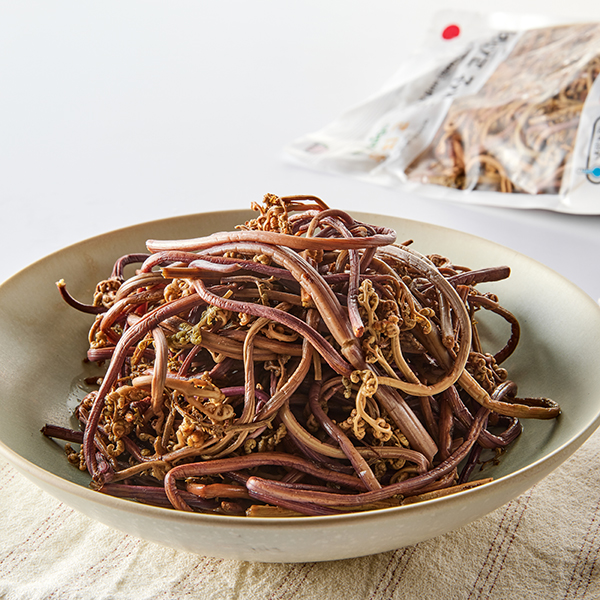
고사리 is called bracken in English
And I was pronouncing 고 in such a way that it was closer to an English “o” — this is wrong and no one understood what I was asking for. It is closer to “oo” as in “boot” than “o” like “boat”. So, make sure in your practice to bring that 오 down and it’ll help tremendously!
Now, on to the regularly scheduled programming!
-라고 하다: "They said..."
This is reported speech — you're passing along what someone else said, asked, suggested, or commanded. You’re acting as a sort of messenger in this case.
The shape changes depending on the type of sentence being reported:
- Questions: -냐고 하다
- Commands: -(으)라고 하다
- Suggestions: -자고 하다
- Statements: this one depends on what kind of word you're quoting
Statements: it depends on the word type
The ending before -고 하다 changes depending on whether you're reporting a verb, adjective, or noun:
Verbs → -ㄴ/는다고 하다
친구가 매일 운동한다고 했어.
My friend said they exercise every day.
지혜가 내일 비 온다고 했어.
Jihye said it's going to rain tomorrow.
Adjectives → -다고 하다 (just attach 다고 directly to the stem)
그 영화 재미있다고 했어.
They said that movie is interesting.
제주 날씨 춥다고 했어.
They said the weather in Jeju is cold.
Nouns + 이다 → -(이)라고 하다
그 사람이 의사라고 했어.
They said that person is a doctor.
오늘이 마감일이라고 했어.
They said today is the deadline.
Past tense (all word types) → -았/었다고 하다
어제 많이 먹었다고 했어.
They said they ate a lot yesterday.
In everyday speech, 하다 often gets shortened — 하다 → 해 → or dropped entirely.
Other sentence types
친구가 왜 안 왔냐고 물어봤어.
My friend asked why I didn't come.
의사가 물을 많이 마시라고 했어.
The doctor told me to drink a lot of water.
같이 밥 먹자고 했어.
They suggested we eat together.
-더라고(요): "I noticed that..." / "It turned out..."
Here, you're recalling something you personally experienced, witnessed, or realized and sharing that observation.
Think of it as: "When I was there / when I saw it / when I tried it... I noticed that..."
It always carries the feeling of firsthand discovery.
Examples
제주 바다가 진짜 예쁘더라고요.
(I went and saw for myself, and) Jeju's ocean was really beautiful.
그 카페 커피가 생각보다 맛있더라고.
(I tried it, and) that cafe's coffee was better than I expected.
한국어 발음이 생각보다 어렵더라고요.
(From my own experience,) Korean pronunciation turned out to be harder than I thought.
아침에 운동하니까 확실히 컨디션이 좋더라고.
(I've been doing it and noticed that) exercising in the morning definitely makes me feel better.
Notice the pattern: every single one of these is something you experienced yourself. You can't use -더라고 to talk about something you only heard about secondhand — that's what -라고 하다 is for.
Side by Side
Let's see how the same situation plays out with each:
| What you're saying | Construction |
|---|---|---|
-라고 하다 | 친구가 그 식당 맛있다고 했어. | My friend said that restaurant is good. |
-더라고 | 그 식당 진짜 맛있더라고. | That restaurant was really good (I went and found out). |
With -라고 하다, you might never have been to the restaurant, but you're just passing along your friend's words.
With -더라고, you went there and are reporting back from personal experience.
And what’s even better is that you can combine them!
Take a look at this sentence:
친구가 제주 겨울 바다가 진짜 예쁘다고 하더라고요.
What's happening here? Both constructions are doing their job at the same time:
- -다고 → your friend said it (reported speech)
- -더라고요 → you were there when they said it (your firsthand recollection)
The result: "My friend said Jeju's winter ocean is really beautiful and I remember them saying that."
It's not just "my friend said X." It's "I was with them and I'm recalling that moment for you now."
Compare all three
Let's use the same situation — a restaurant that's supposedly good:
-라고 했어: 친구가 그 식당 맛있다고 했어.
My friend said that restaurant is good. (just relaying info)
-더라고: 그 식당 진짜 맛있더라고.
That restaurant was really good. (I went and experienced it myself)
-라고 하더라고: 친구가 그 식당 맛있다고 하더라고.
My friend said that restaurant is good — (I remember hearing them say it.)
Next time you learn about something, give one of these constructions a shot! Also, if you keep an eye out for them, you’ll hear them all over.
Quick Test
Which one would you use?
- Your coworker told you the meeting is at 3.
- You went to a new gym and the equipment was surprisingly good.
- Your mom asked if you ate.
- You tried making 김치찌개 and it was actually easy.
- You were at dinner and your friend says the pasta is too salty.
Answers:
- 회의 3시라고 했어. → -라고 하다 (reporting someone's words)
- 운동 기구가 생각보다 좋더라고. → -더라고 (your own experience)
- 엄마가 밥 먹었냐고 물어봤어. → -냐고 하다 (reporting a question)
- 김치찌개 만들기 생각보다 쉽더라고. → -더라고 (your own discovery)
- 친구가 파스타가 너무 짜다고 하더라고. → -라고 하더라고 (you personally heard them say it)