If you've been invited to a wedding in Korea, you've probably noticed it looks pretty different from a Western wedding. Weddings here happen at an 예식장 (wedding hall), a building often booked out for several ceremonies back to back on the same day. Guest lists run big too — coworkers and extended family show up alongside close friends, so a few hundred people isn't unusual.
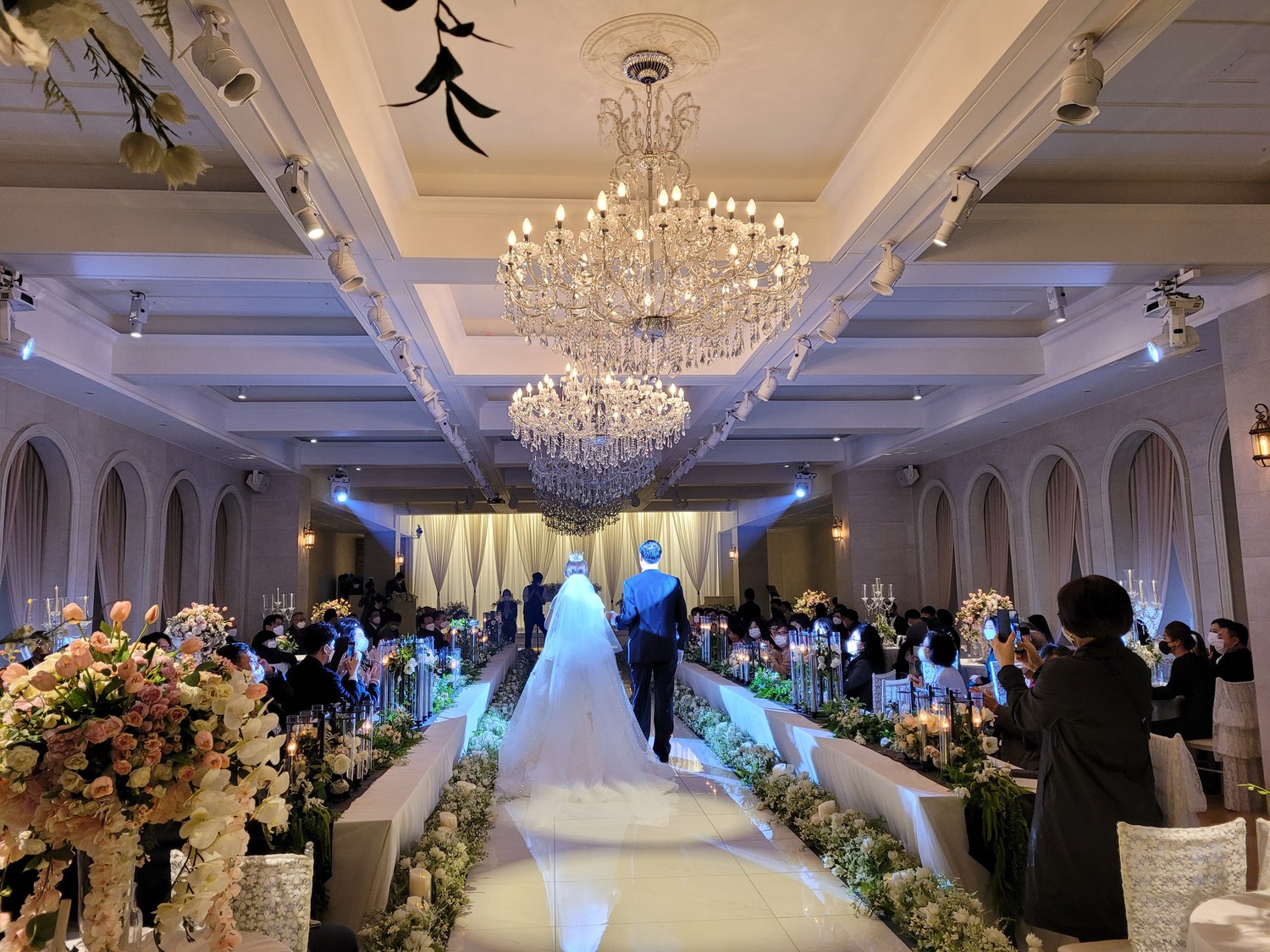
The ceremony itself moves fast, usually wrapping up in 20 to 30 minutes since the next couple is waiting on the same room. A 주례 — an officiant, often a mentor or senior figure the couple respects — leads the ceremony and gives a short speech on marriage. Somewhere in the middle, a friend performs a 축가, a congratulatory song, before the couple exchanges vows. Then everyone heads straight to the buffet.
That's the shape of the day. What actually sets this culture apart, though, is how the invitation, the money, and the buffet each come with their own set of rules. Let's break it down!
Getting the Invitation (청첩장)
청첩장 breaks down as 청 (request) + 첩 (notify) + 장 (document) — literally a "document requesting notification." These days almost nobody prints and mails paper invitations anymore. Most people send a digital 청첩장 through KakaoTalk, often a slick single-page site with photos, the date, the venue, and a map link built in.
Paper invitations still exist for close family or older relatives, but the KakaoTalk version has basically become the default. If you get one, a quick reply confirming you're coming is expected.
For close friends, couples often hold a 청첩장 모임 — a small gathering before the wedding where they hand out paper invitations in person over a meal. It's less about the invitation itself and more of an excuse to catch up before things get busy. The couple usually covers the bill.
The Congratulatory Money (축의금)
This is the part that trips up a lot of foreigners. In Korea, you don't bring a wrapped gift — you bring cash.
축의금 breaks down as 축 (celebrate) + 의 (ceremony/formality) + 금 (money). You put the cash in a plain white envelope, write your name on the front, and hand it to a receptionist at a table near the entrance. In exchange, you get checked off a guest list and handed a meal ticket for the buffet.
Amounts matter here. 50,000 or 100,000 원 is typical depending on how close you are to the couple, and odd numbers (e.g., 3만원, 5만원, 7만원) are preferred over even ones since odd numbers are traditionally associated with good luck. If you're not attending but still want to send something, you can transfer the money directly and let them know.
The Wedding Hall and Buffet (예식장 / 뷔페)
예식장 breaks down as 예식 (ceremony/rites) + 장 (place) — a dedicated ceremony hall. Most Korean weddings happen in one of these rather than a church or outdoor venue, and the building is often booked out for back-to-back weddings all day. Ceremonies tend to run short, often under an hour, since the next couple is waiting for the same room.
뷔페 is just the Korean pronunciation of "buffet," borrowed directly from French. After the ceremony, guests head to the hall's buffet restaurant to eat, chat, and take photos.
A Few More Customs
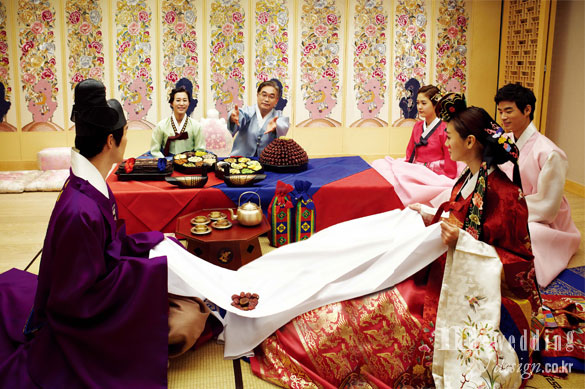
- 폐백: A private ceremony right after the main wedding where the couple bows to the groom's parents and receives blessings, sometimes including dried dates or chestnuts tossed for the couple to catch — said to predict how many kids they'll have.
- 함: A box of gifts, traditionally sent from the groom's side to the bride's family before the wedding. It used to involve a rowdy night of friends delivering it door to door; today it's usually a much quieter, low-key handoff.

Next time you get one of those KakaoTalk invitations, you'll know exactly what's coming — cash envelope, buffet ticket, and a ceremony over before you've finished your drink. 🥂